Designing a nursery often feels like entering a strange parallel universe of home decor.
Loud primary colors abound, mixed with overly cartoonish animal prints and flimsy furniture that looks out of place.
It does not have to be this way. Your baby is joining your family, which means their space can beautifully reflect the aesthetic of your whole home.
A nursery should be a true refuge. It is a room where you will spend countless hours awake in the middle of the night, so you deserve an environment that brings genuine calm.
The best modern nurseries blur the line between a baby room and a curated interior. They rely on tactile textures, deeply saturated hues, and vintage pieces that tell an authentic story.
Instead of buying a matching furniture suite out of a catalogue, you can layer a space with character. If you are designing specifically for a little boy, browse our favorite nursery ideas for boys.
Earthy and Grounded
Drawing direct inspiration from nature creates an intensely soothing nursery environment.
This aesthetic celebrates warm mineral tones, organic textures, and natural imperfections that add character rather than hiding it.
1. Warm Terracotta Walls
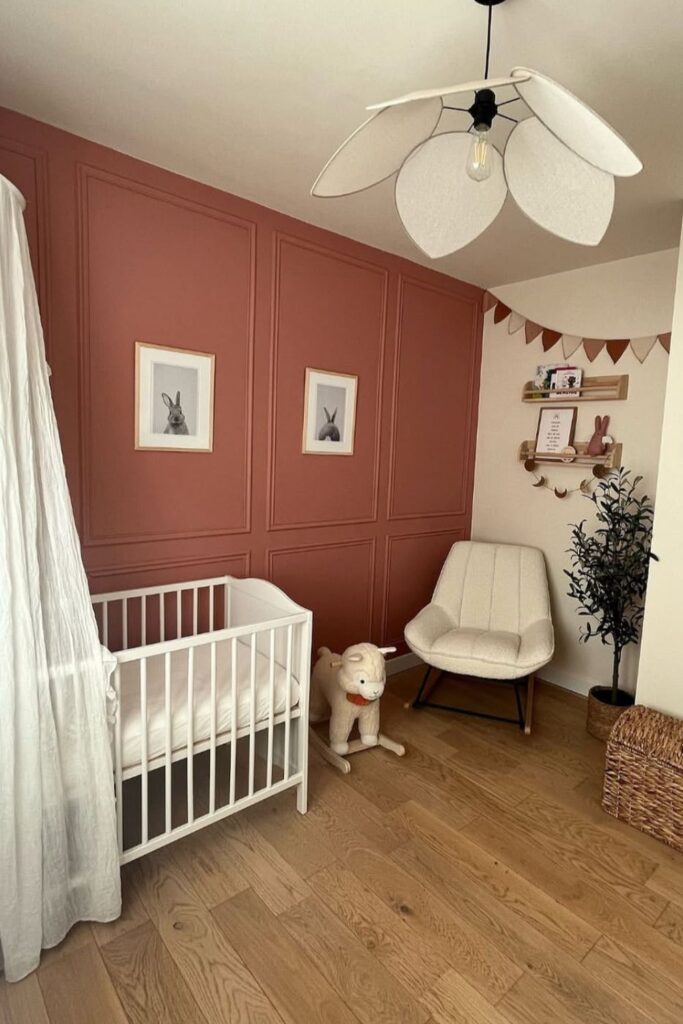
Skip the predictable pastel pink and powder blue. A rich, sun-baked terracotta instantly brings earthy warmth and depth to the room without feeling overwhelming.
This color wraps around you like a soft wool blanket. It pairs effortlessly with raw wood tones and crisp linen, creating a deeply comforting backdrop.
2. Natural Rattan Accents
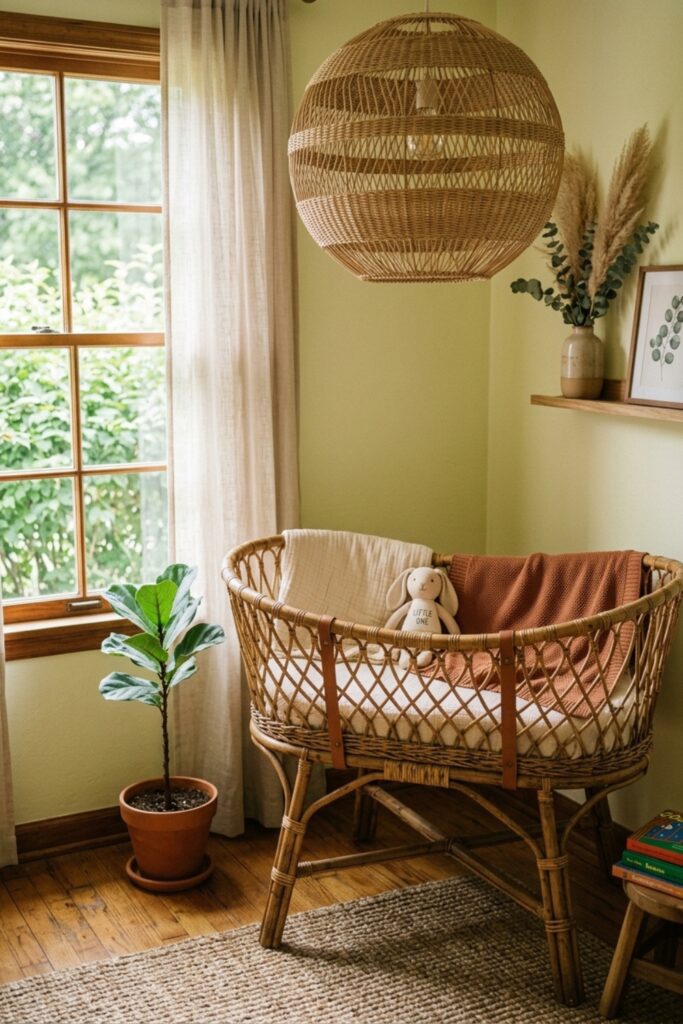
Woven rattan introduces an essential layer of organic texture.
Whether you choose a vintage-inspired rattan bassinet, a storage basket, or a large woven pendant lamp, this material delivers a relaxed, coastal energy.
3. Unbleached Linen Textures
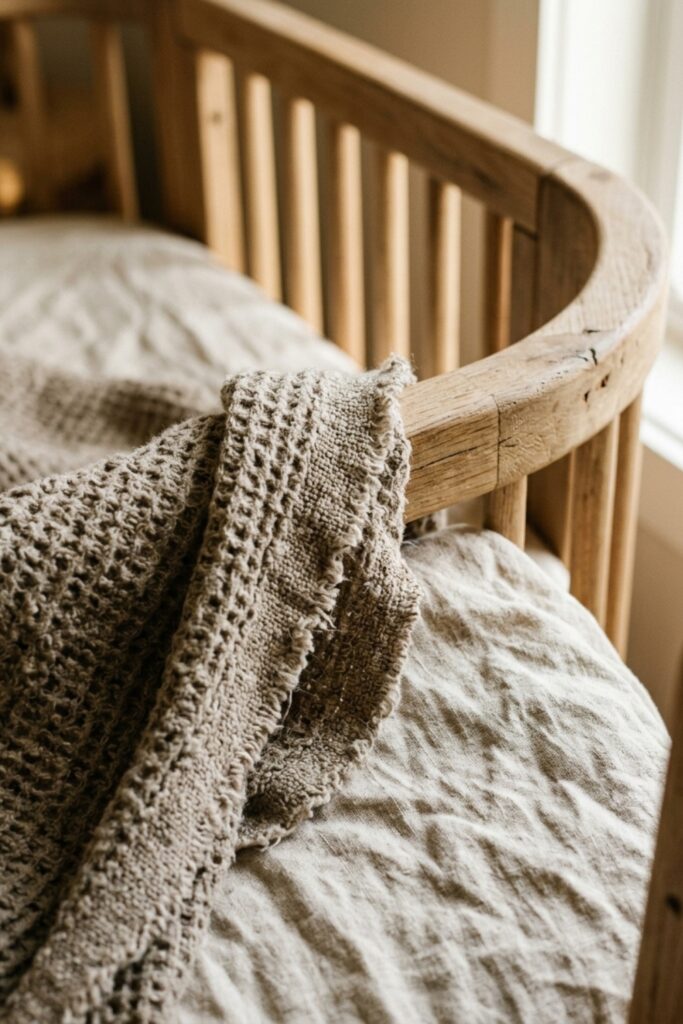
The textiles you touch day and night matter immensely. Unbleached oatmeal linen has a tactile, breathable texture that actually looks better when gently lived-in and rumpled.
Using linen for heavy blackout curtains, crib sheets, or a glider slipcover elevates the entire sensory experience of the room.
4. Plaster Wash Finishes
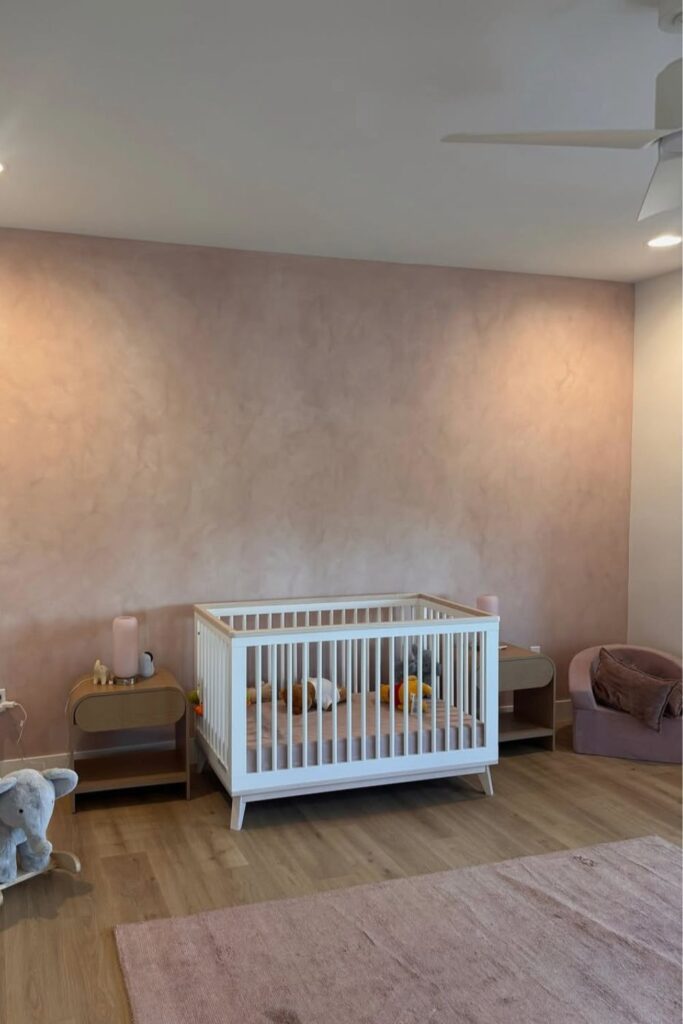
Standard flat drywall paint can leave a room feeling flat and sterile. Applying a Roman clay or limewash wash finish gives your walls subtle cloud-like movement and a velvety matte surface.
It captures shifting daylight beautifully, reminiscent of historic European villas. This single treatment transforms a plain drywall box into a space with genuine architectural soul.
5. The Wabi-Sabi Aesthetic
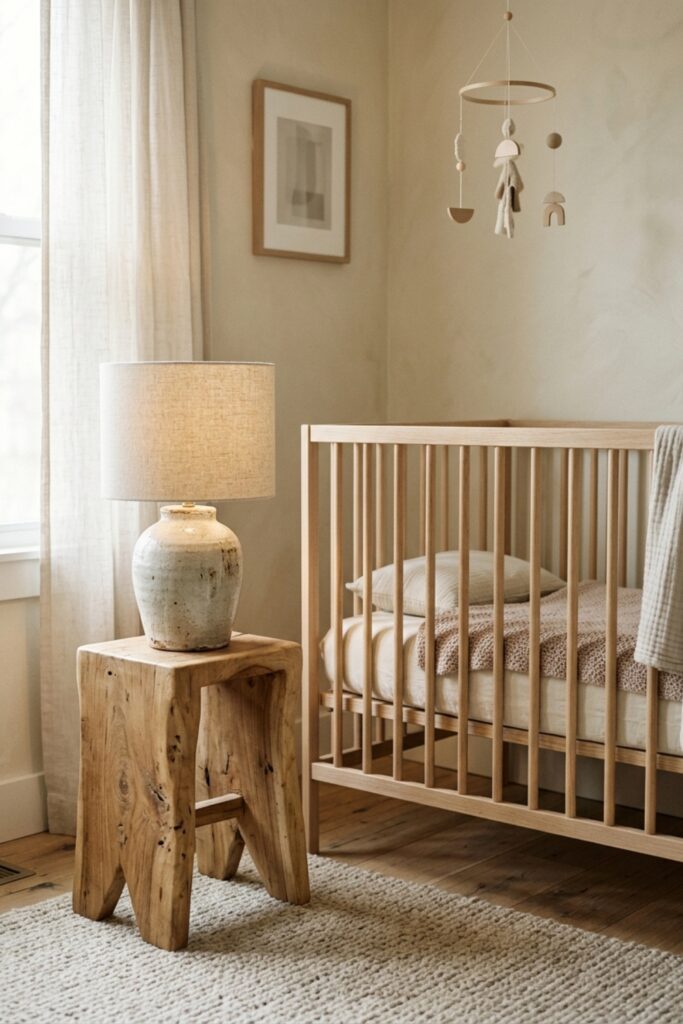
Embrace the Japanese aesthetic philosophy of finding peace in imperfection. That translates to handmade stoneware lamps, carved wooden stools, and gentle, irregular contours.
Resist buying matchy-matchy plastic decor. A small collection of soulful, artisanal goods makes a far more enduring impression.
Vintage and Collected
A nursery feels so much richer when it appears gathered thoughtfully over time.
Blending one-of-a-kind antique accents with modern safety essentials gives the room timeless charm and personal history.
6. The Heirloom Wooden Cot
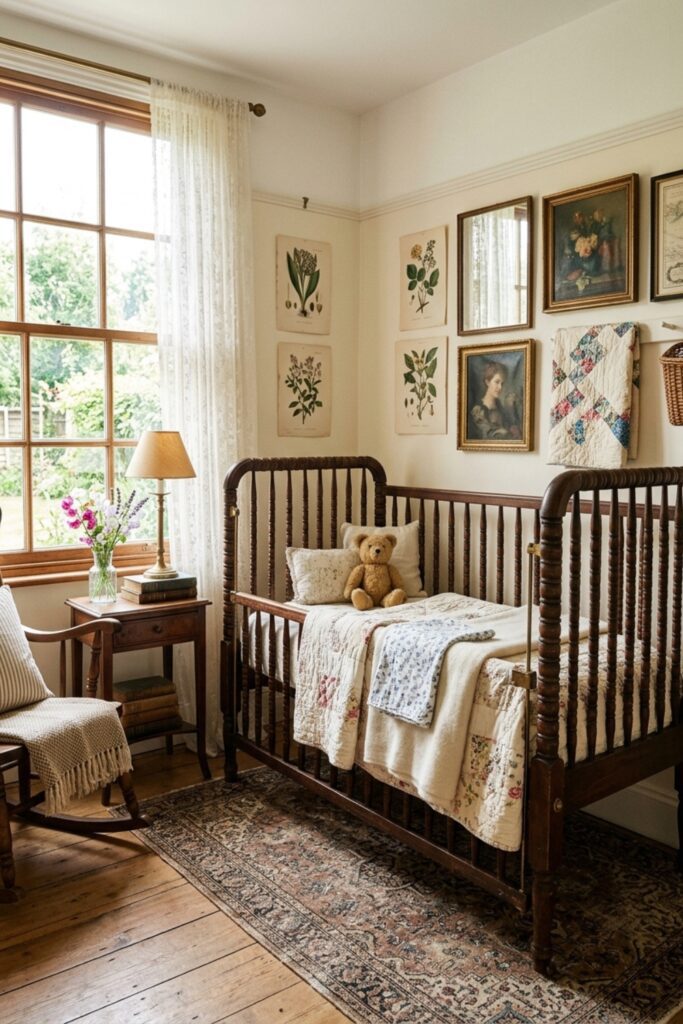
Steer clear of bulky contemporary plastic cribs. A delicate spindle cot in warm walnut or honey oak provides a gorgeous architectural anchor.
When styling a vintage-inspired crib, safe sleep practices must always come first. The American Academy of Pediatrics advises that babies should sleep on a firm, flat mattress completely free of loose blankets, pillows, bumpers, or plush toys.
Be sure to consult the complete AAP safe sleep guidelines before setting up your nursery sleep station.
7. Antique Brass Details

Changing the hardware instantly transforms ordinary furniture into bespoke statement pieces.
Swap plain knobs for heavy unlacquered brass pulls, or hang an antique gilded mirror above the changing table. The metal will age gracefully with a natural patina over time.
8. Scalloped Edges and Borders
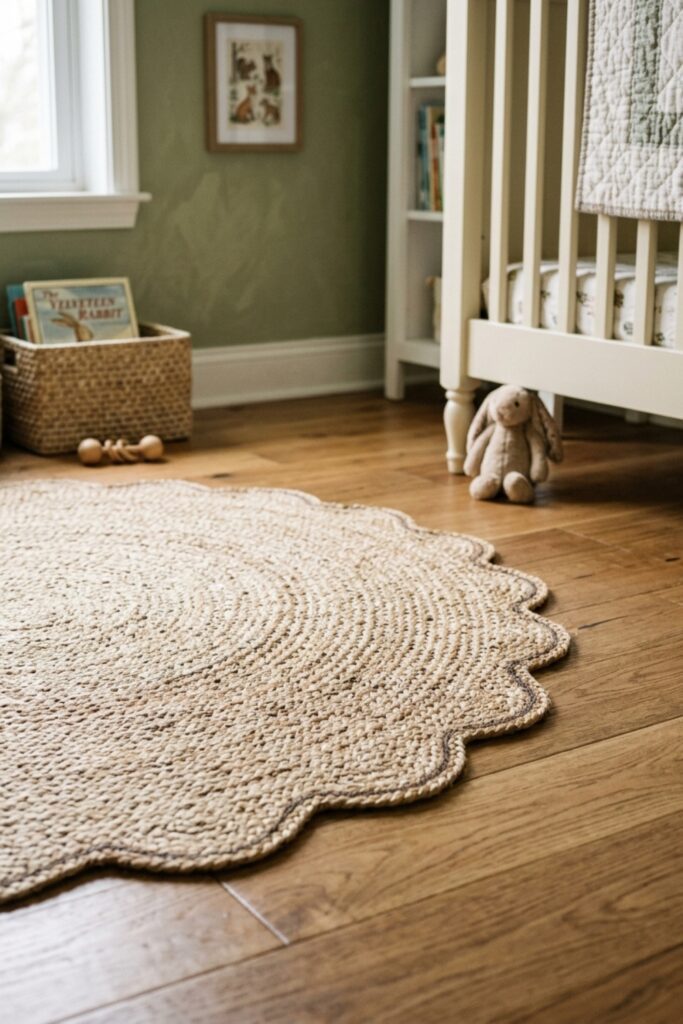
Scalloped silhouettes bring an imaginative, nostalgic touch without veering into childish kitsch.
A natural jute rug edged with neat scalloping or a tailored scalloped window cornice introduces soft, playful rhythm to clean lines.
9. Faded Floral Wallpaper
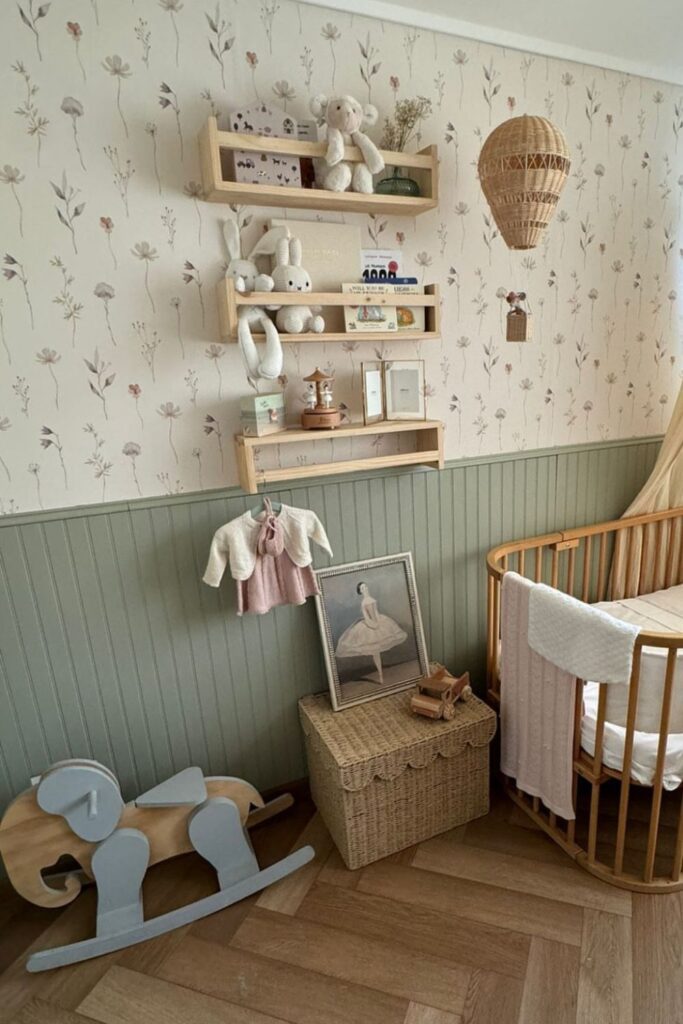
Wallpaper creates an immersive, cocooning atmosphere right away. Choose muted vintage botanicals rather than overwhelming modern cartoon patterns.
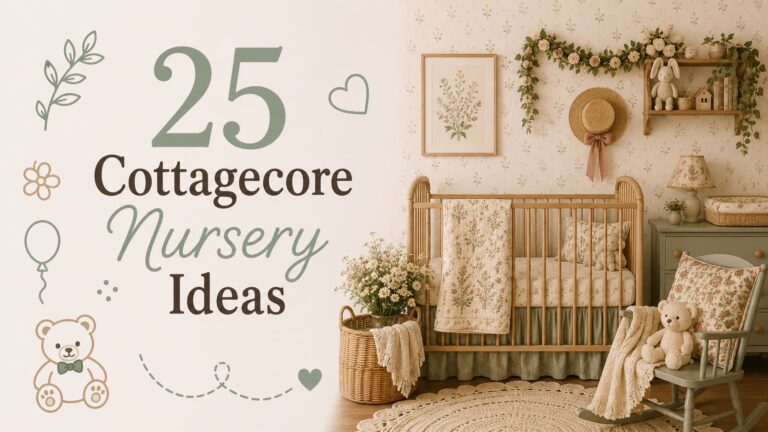
Subtle olive foliage and washed rose petals feel like an English country garden. If you adore soft nostalgic charm, browse our favorite cottagecore nursery ideas.
10. The Vintage Rug Foundation
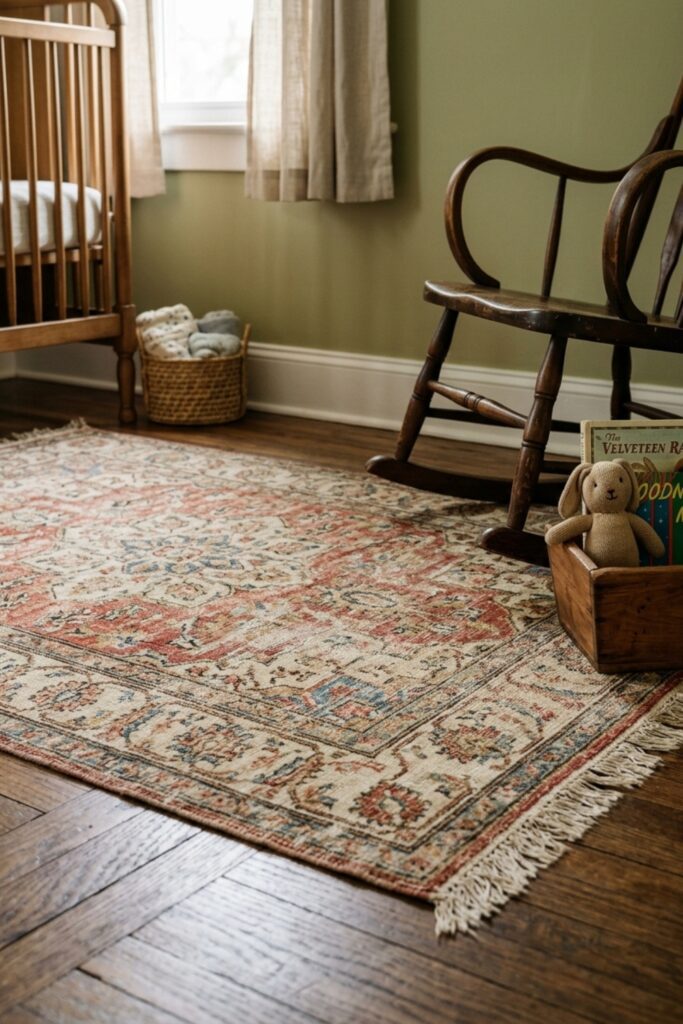
Skip the synthetic plush shag rug that traps dust. A vintage Turkish or Persian wool runner brings rich heritage and incredible resilience.
Intricate, washed patterns camouflage inevitable spills effortlessly while grounding the nursery with genuine design gravitas.
Dark and Moody
There is a persistent myth that nurseries must always be white and bright.
In reality, darker spaces promote deep, restorative sleep. They wrap babies in a comforting, protective cocoon.
11. Deep Forest Green Paneling
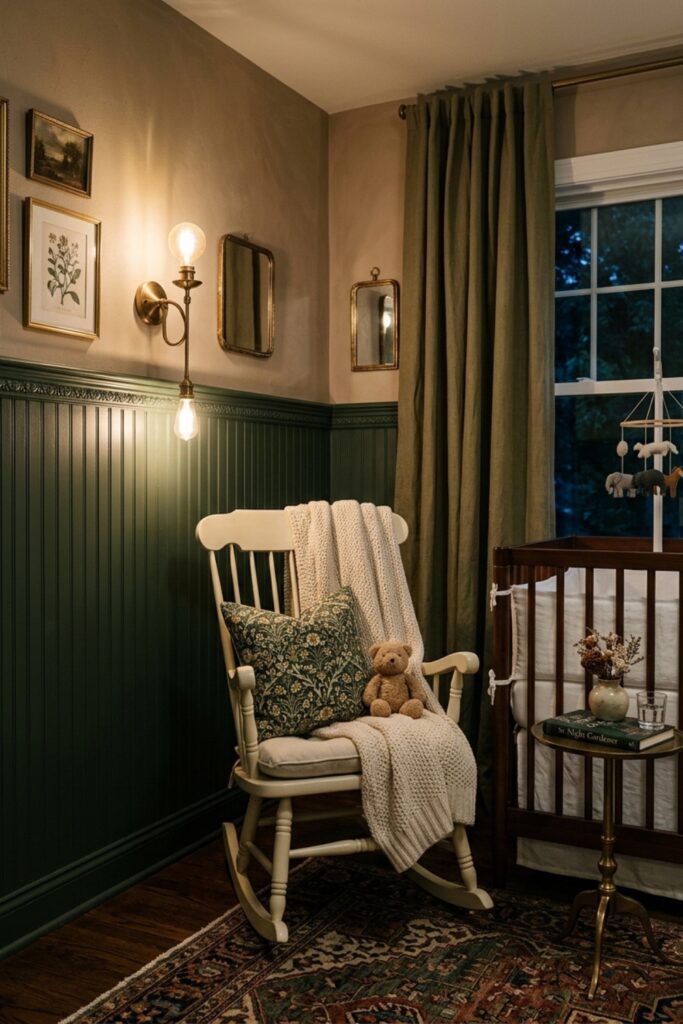
Installing classic beadboard or box wainscoting coated in deep pine green adds instant architectural weight.
The moody tone channels the tranquility of an ancient forest. For creative art displays, read our guide on nursery wall decor ideas.
12. Rich Chocolate Brown Tones
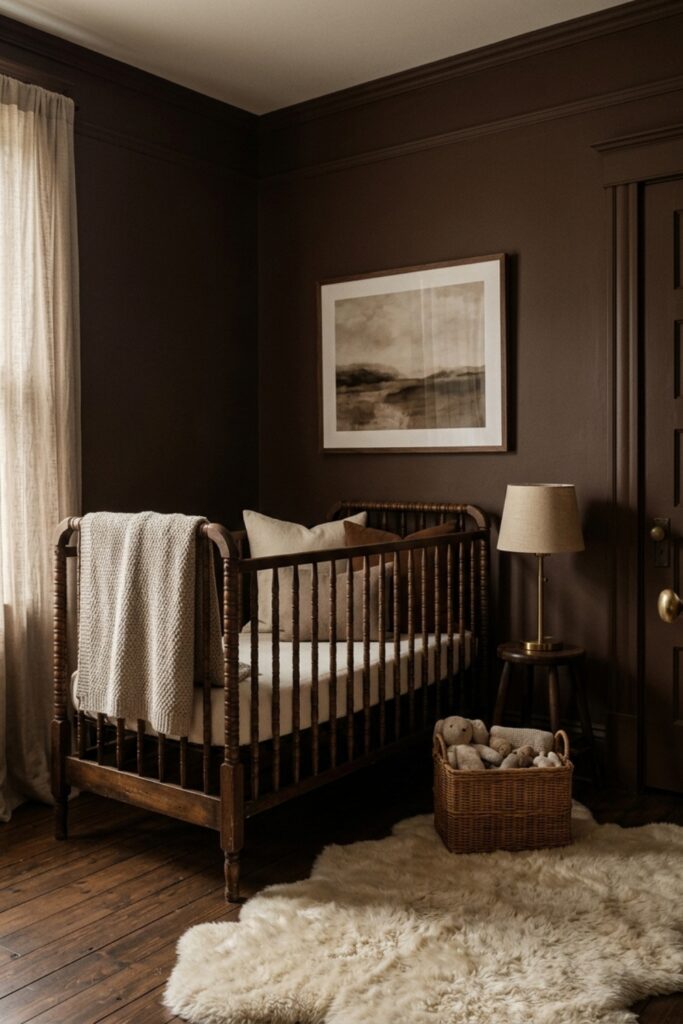
Espresso and rich cocoa hues create an unexpectedly modern and cozy atmosphere.
If painting all four walls dark brown feels intimidating, layer the color through floor-to-ceiling drapery or walnut millwork instead.
13. Heavy Velvet Curtains
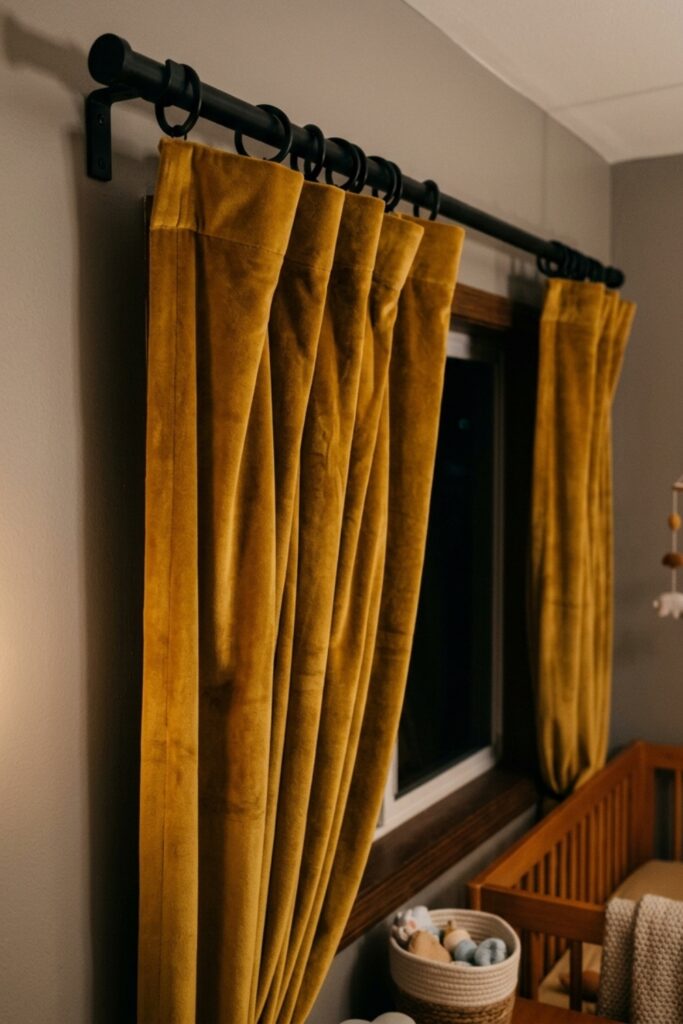
Here practical nursery utility meets pure luxury.
Dense velvet panels are naturally unmatched at eliminating harsh midday light for naps, while their heavy drape adds sumptuous drama.
14. The Statement Ceiling
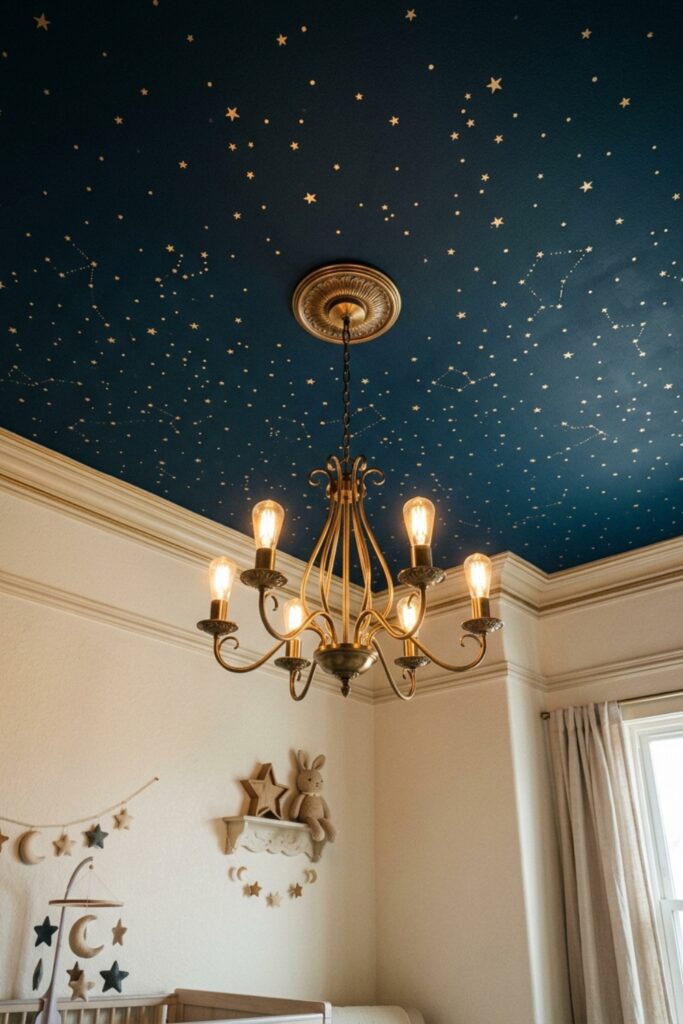
If you prefer keeping walls bright, treat the ceiling as your fifth wall and paint it deep indigo or midnight navy.
Add subtle hand-stenciled gold stars or celestial paper. Since infants spend so much time lying down, looking upward becomes a calming sensory experience.
15. Matte Black Accents
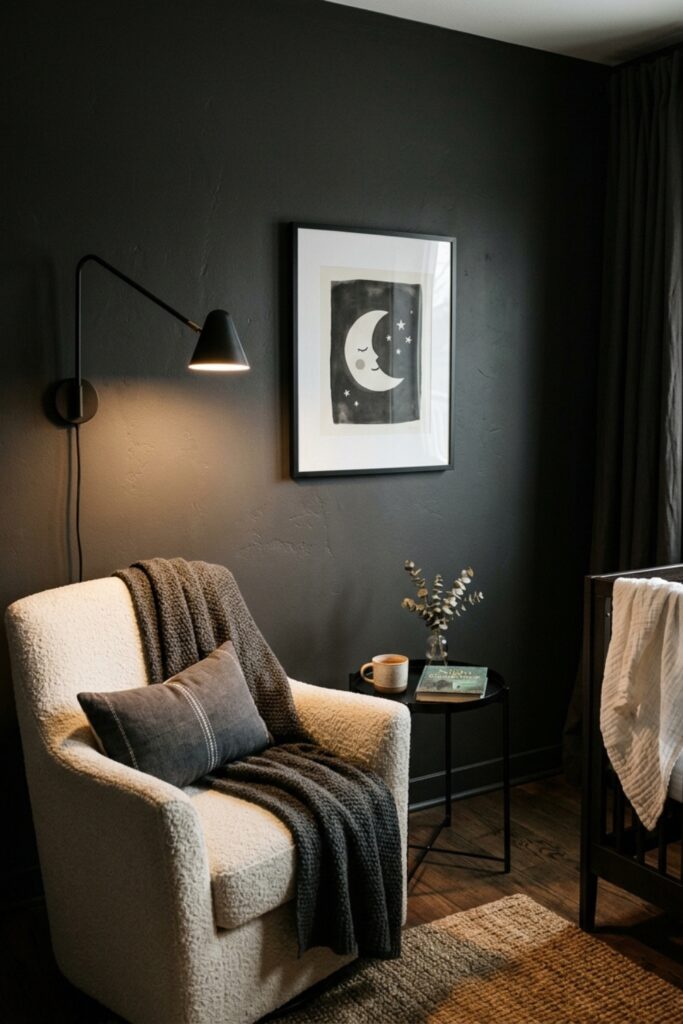
Matte black details act as the necessary grounding anchor in an atmospheric room.
Use slim black picture rails, dark metal curtain rods, or minimalist wall sconces to provide crisp contrast against softer textiles.
Clever and Compact
Not every home comes with a sprawling spare bedroom to dedicate to a nursery.
Exceptional design thrives under constraints. Small spaces simply demand intentional choices that maximize daily function.
16. The Closet to Nursery Conversion
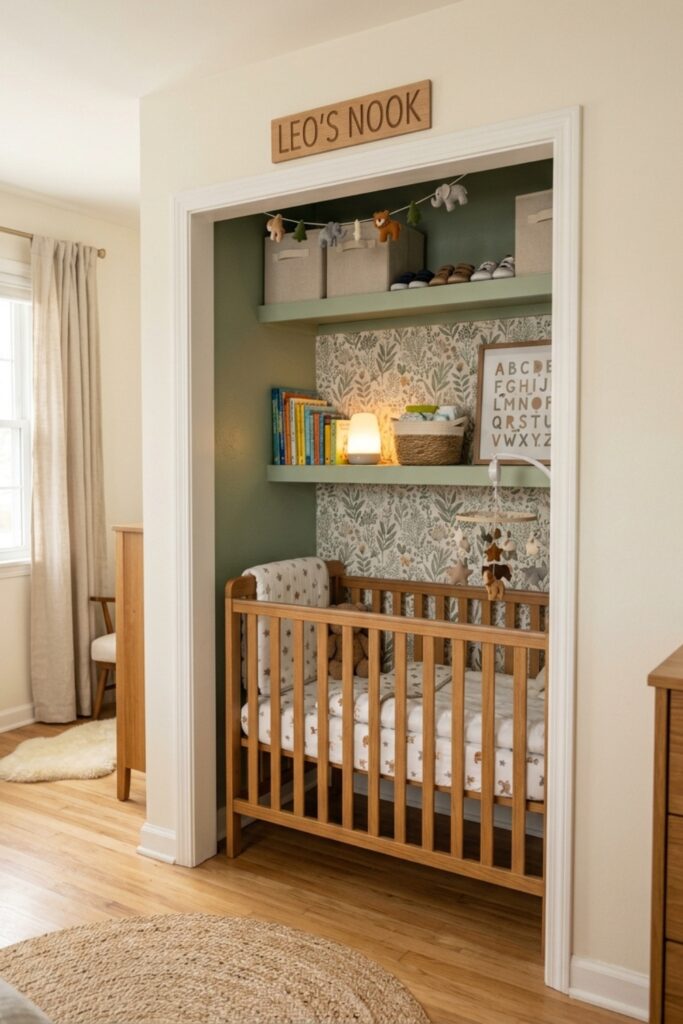
In compact city apartments, removing standard closet doors creates an instant nursery sleep alcove.
Line the back wall with playful wallpaper or warm paint. A standard crib tucks neatly inside, freeing up valuable floor space elsewhere.
17. Vertical Floating Shelves
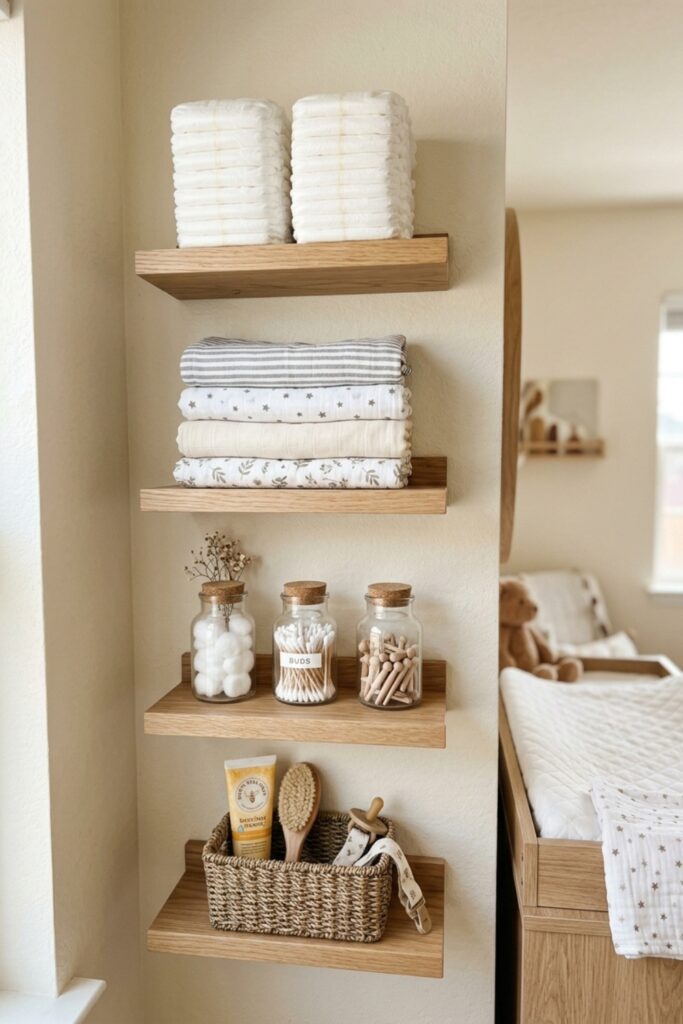
When square footage is tight, your walls are your greatest asset.
Install a neat column of solid oak floating shelves directly beside your changing dresser to keep diaper balms, wipes, and cloths at arm’s reach.
18. Multi-Purpose Changing Dressers
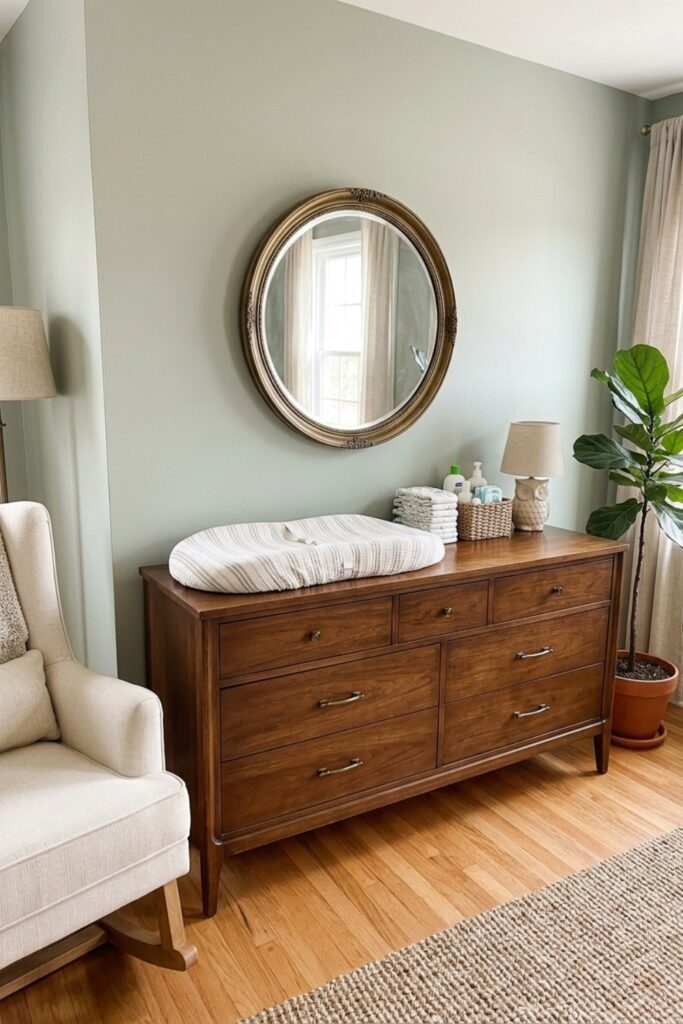
Skip dedicated single-use changing tables altogether. They are outgrown in less than a year.
Instead, invest in a quality solid wood dresser and affix a secure changing tray to the top. Once diaper days end, the piece stays seamlessly in their room.
19. Hidden Woven Storage
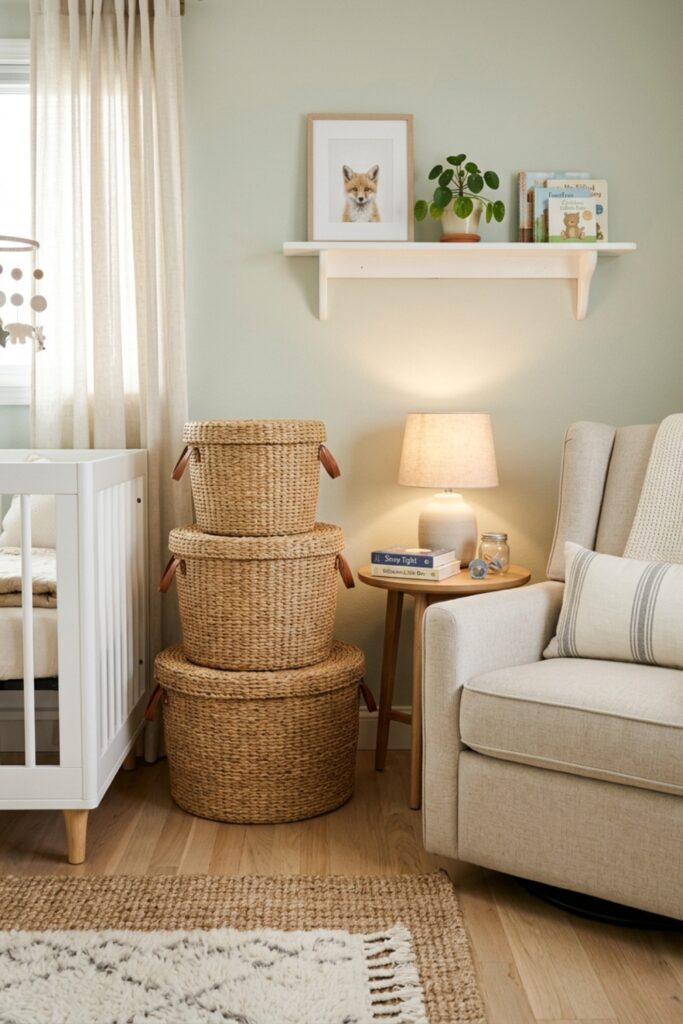
Infants require an astonishing quantity of tiny gear. The secret to visual calm is ruthless concealment.
Invest in large, structured woven baskets with fitted lids. They tuck away swaddles, blankets, and toys while adding rich organic warmth.
20. The Built-In Window Nook
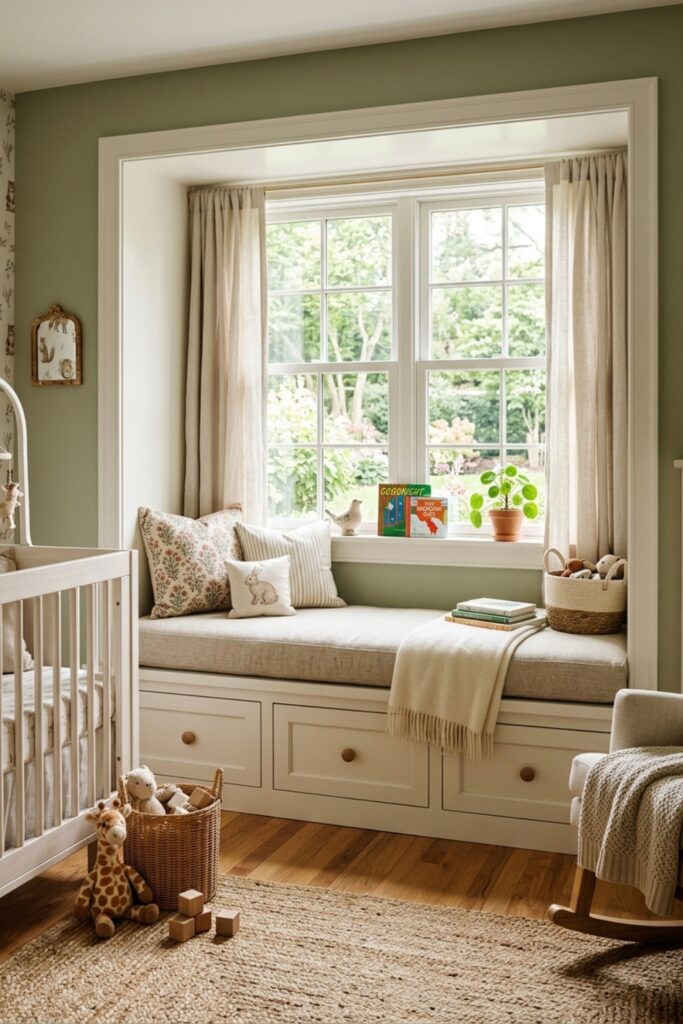
If you have room for a simple weekend DIY project, a built-in window bench seat is transformative.
It creates an idyllic spot for storytime, while deep drawers underneath house bulky extra bedding and off-season clothing.
Sloane’s Take
Sloane’s Take
“Designing a nursery is about creating a space where you feel calm at 3am. Focus on comfortable seating, layered soft lighting, and hidden storage before you worry about matching patterns. When you choose elements you genuinely love, the room becomes a sanctuary for the entire family.”
Final Thoughts
The most important thing to remember is that this room is just as much for you as it is for your baby. Never feel pressured to conform to juvenile themes that clash with your personal taste.
Focus on creating an emotional mood. When you invest in layered lighting, comfortable seating, and rich tactile textures, the nursery becomes a welcoming space where your entire family loves to linger.